
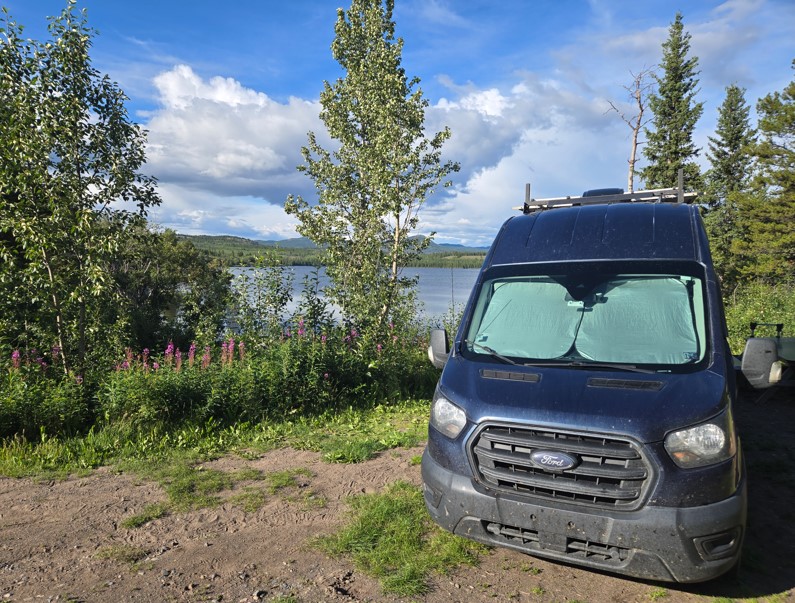
Boondocking is the ultimate challenge for vanlifers. To park your vehicle in a place where only the sights and sounds of nature exist outside your windshield – that is the dream. No campground reservations, no neighbors, no utility hookups, and no fees. This is the essence of van travel in its purest form.
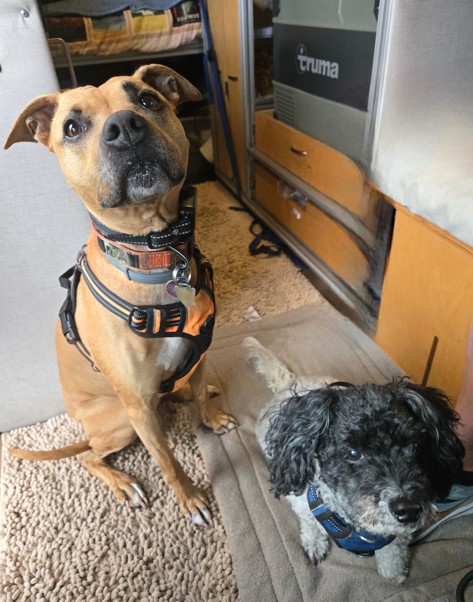
This past summer, my husband, two dogs, and I traveled in our converted campervan across three Western Canadian provinces to Alaska and back, covering 19,000 miles over 3 months. Since we are completely self-sufficient in our van – we have electricity, water, food, a toilet, and a queen-sized bed – we looked forward to boondocking, aka “dry camping,” “dispersed camping,” or “random camping,” across the provinces of Alberta, British Columbia, and the Yukon.
In the “Lower 48,” we rarely have trouble finding a suitable and legal place to camp outside of paid campgrounds. We use apps like iOverlander and The Dyrt, to find a place to park for a night.
Before we left for our trip, I researched and confirmed that boondocking is indeed legal in Canada on “crown” land, owned by the monarch, which represents almost 90% of the entire country. Crown land reminds me of National Forest or BLM (Bureau of Land Management) land in the U.S, which is owned by the U.S. government, which also allows dispersed camping.
So, if boondocking is allowed in Canada, it should be easy peasy, right?
Uh, not so fast.
Is boondocking allowed in Canada?
Technically? YES.
Practically? NO.
I’m sure there are lots of people who have successfully boondocked their little butts off all over Canada, but we had a hard time. I was part of the problem because, unfortunately, I can’t sleep at night if I think we are parked somewhere that we aren’t supposed to be.
Pat would have been willing to take chances and try out some random camping spots, but I felt too uncomfortable. I think I offended one visitor center rep when I admitted that if we inadvertently trespassed on private property, I was scared someone was going to knock on our door in the middle of the night and threaten us with a shotgun.
“Oh no!” she shook her head.” This is Canada! Not the United States.”
True that.

In the U.S., we routinely ask authorities in visitor centers and ranger stations where we might be allowed to park and camp in our van overnight, and usually, the reps, volunteers, and rangers happily provide this information, sending us away with pamphlets, brochures, and maps with handwritten “Xs” marked in pen.
However, at the first visitor center we went to in Prince George, British Columbia, I asked where we might be allowed to camp overnight, and the visitor center rep averted her eyes.
“I’m not allowed to answer that question,” she said darkly.
I thought that was odd, but the next day in another visitor center, I asked the same question, and this time the representative completely ignored me and refused to answer my question. This confused me.
“Uh, aren’t people allowed to camp on crown land?” I pressed.
“Yes,” she admitted.
“Isn’t there any crown land around here?”
“I don’t know,” she shrugged, pointing on a map to a nearby campground, which is where we ended up paying to stay for the night.
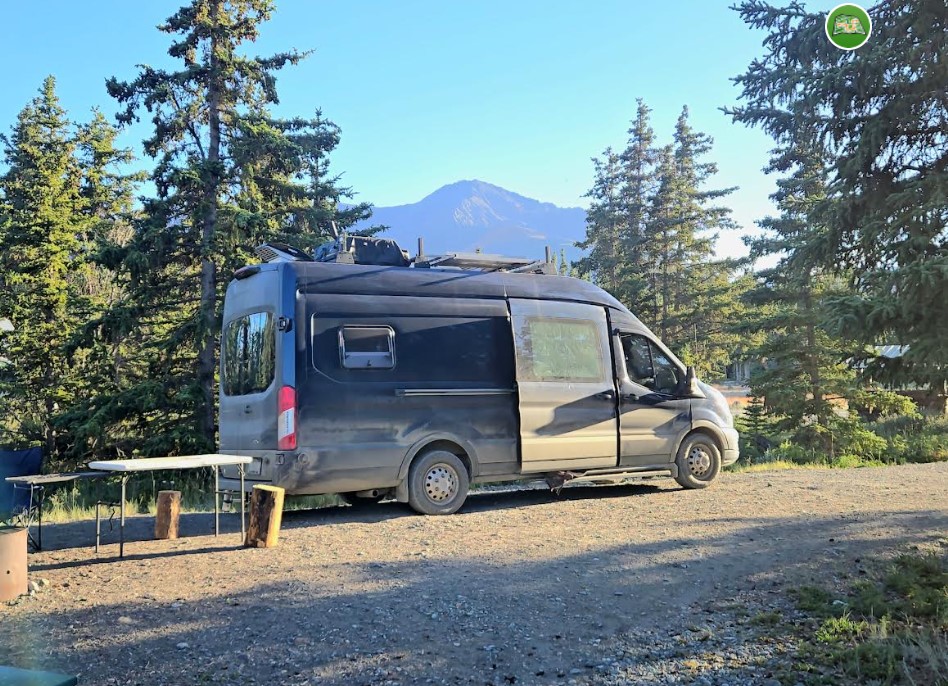
Every time I asked this question, I always got the same answer. Everyone in Canada agreed that you are allowed to camp on crown land, but no one had any idea where to find it.
“You don’t know where crown land is?” I incredulously asked a woman at the Watson Lake visitor center in the Yukon.
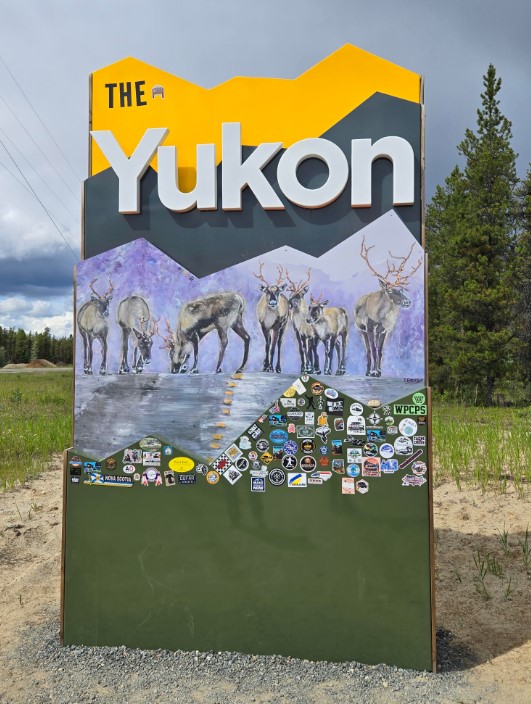
“I’ve lived here my whole life and I don’t know where the crown land boundaries are. Nobody knows,” she insisted.
We ended up paying for another night in a local campground.
However, the guy who worked at the visitor center in the tiny Yukon town of Carmacks, almost helped us. He actually started to suggest a few nearby places, but then he stopped and frowned at me.
“You just don’t want to pay for a campground,” he said, narrowing his eyes.
His accusing tone rankled me.
“No, not at all!” I blurted. “We’ve been paying for campgrounds all week.”
I was still feeling defensive, so Pat reminded me that visitor centers are like chambers of commerce. “It’s their job to promote the local businesses, like the nearby campgrounds,” he said.
“I don’t care, from now on, I only want to stay in campgrounds,” I announced.
Fortunately, there are some really good things about the campgrounds in Canada.
- They are INEXPENSIVE. I don’t think we paid more than the equivalent of $15 US dollars for a night.
- They are CLEAN. The campsites and campgrounds are very well cared for. Even pit toilets are spotless and don’t smell, and during the summer, most of the campgrounds have a full-time host who handles maintenance and makes registration easy.
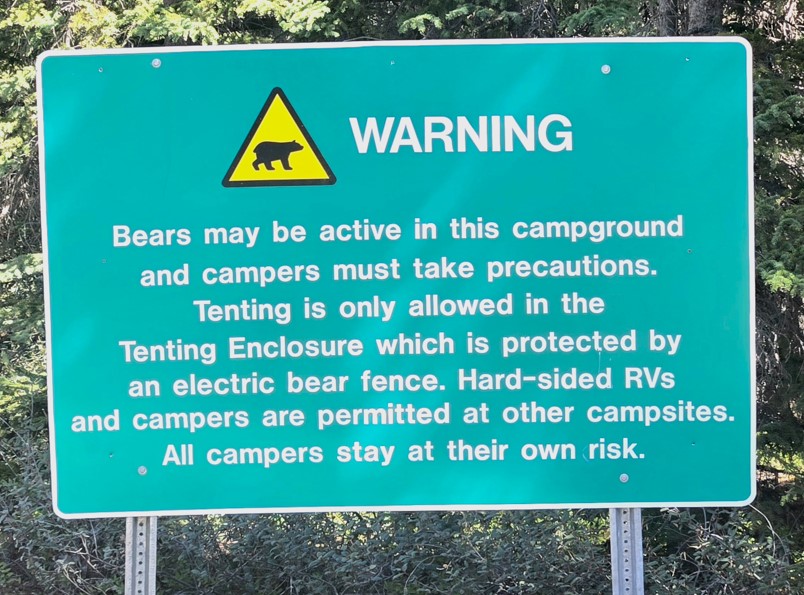
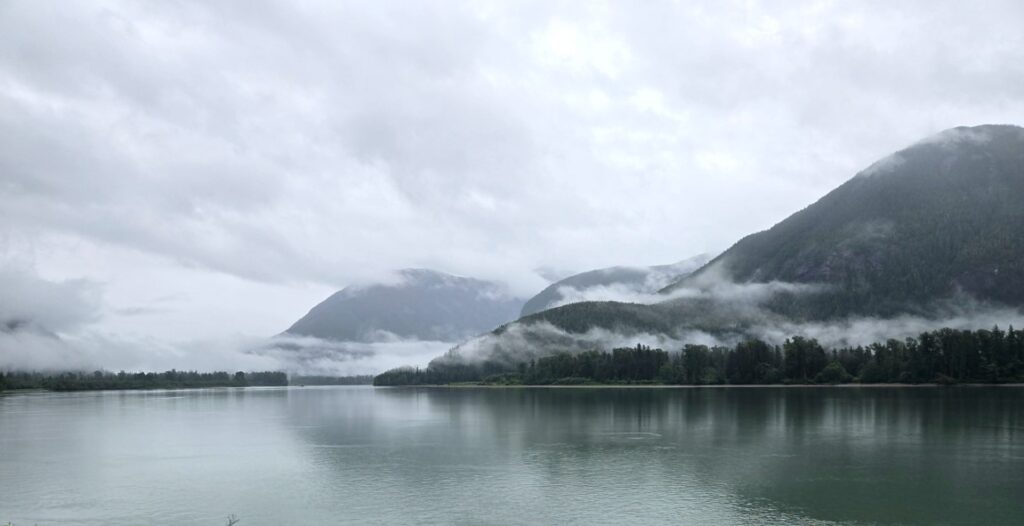
- They are BEAUTIFUL. Mountains, forests, lakes, and rivers. Every campground is a scenic treat. My favorite campground was Congdon Creek at Destruction Bay on the western side of the Yukon. This campground only allowed tent campers to pitch their tents inside an electric fence because of all the bear activity in the area. Being in the van, we didn’t have to park behind the electric fence, but I was disappointed that we didn’t see a bear while we were camping there.
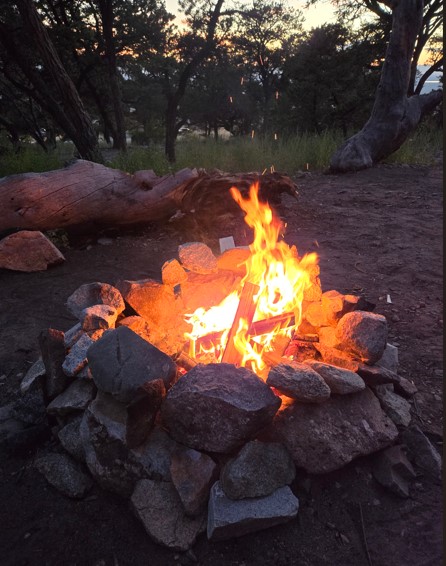
- The campgrounds in the Yukon provide FIREWOOD. This may not sound like a big deal. But imagine the best, driest, and most perfect bundle of firewood that burns cleaner than any firewood you’ve ever burned in your life. Although we were in Canada during wildfire season when campfires weren’t allowed in most places, when we were allowed to build a campfire, it felt special. I would go back to the Yukon just for the firewood.
***
Honestly, I would love to go back to Canada, and when we do, I would happily pay for campgrounds every night.
***